How to Layer Sunscreen with Skincare and Makeup
This post may contain affiliate links. This means if you click on the link and purchase something, I will receive a commission with no extra cost to you. For more information, please read my disclaimer.
Getting your sunscreen placement right within your skincare and makeup routine isn’t just a cosmetic preference — it directly impacts how well your skin is protected from UV damage. Done incorrectly, layering can reduce your effective SPF by up to 50%, leaving your skin far more exposed than you’d expect.
Key Takeaways
- Sunscreen should always be the last skincare step, applied before any makeup, to maintain an unbroken protective film on the skin.
- Applying sunscreen over wet or still-absorbing products causes pilling and reduces efficacy — always wait before layering.
- Makeup SPF doesn’t replace dedicated sunscreen; most people apply only 20–25% of the foundation needed to hit the labeled SPF.
- Reapply sunscreen every two hours outdoors using SPF sprays, powders, or sticks over makeup.
- Mixing sunscreen into your moisturizer or foundation disrupts its protective film and significantly lowers its effectiveness.
Why Layering Order Actually Matters
Sunscreen works by forming a continuous protective film across the skin’s surface. That film can only do its job if it’s applied as the final skincare step, sitting directly on top of everything else.
Applying a heavy moisturizer or serum over your sunscreen disrupts that film. Research shows this can cut your effective SPF protection in half — a significant drop that most people don’t realize is happening.
The FDA recommends treating sunscreen as its own dedicated, non-negotiable step rather than relying on SPF-infused makeup. It’s a simple shift in routine order that makes a substantial difference in how protected your skin actually is.
Chemical vs. Mineral: Which Works Better Under Makeup?
The type of sunscreen you choose matters when it comes to layering under makeup. Both chemical and mineral formulas offer solid broad-spectrum protection, but they behave differently on skin.
Understanding the differences helps you pick the right fit for your routine. Here’s a quick breakdown:
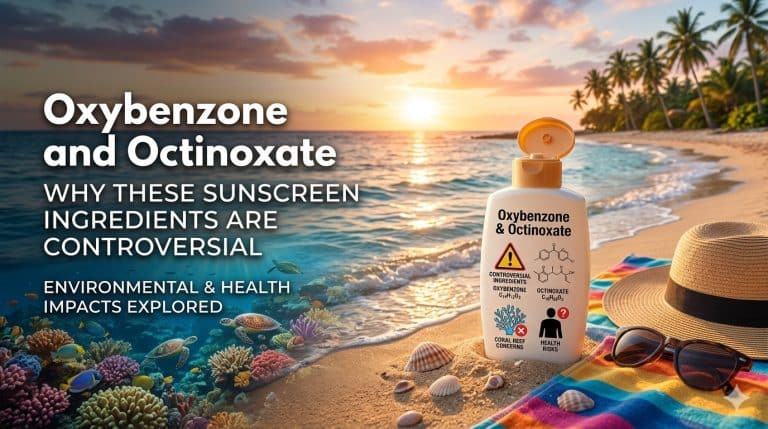
- Chemical sunscreens (like avobenzone and oxybenzone) absorb UV rays and convert them to heat. They need 15–30 minutes to activate, but their lightweight textures layer smoothly under primer and foundation.
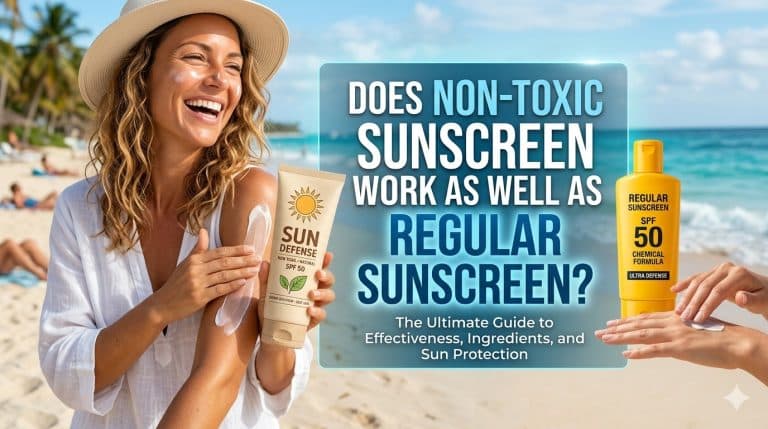
- Mineral sunscreens (zinc oxide, titanium dioxide) sit on top of the skin and physically deflect UV rays. They work immediately but can leave a white cast, particularly on deeper skin tones.
- Tinted mineral formulas are a practical solution for those who want full mineral protection without the ashy finish — check out this guide on dealing with mineral sunscreen white cast for more tips.
- Hybrid sunscreens combine both filter types, offering broad-spectrum protection with better cosmetic elegance — often the best option for regular makeup wearers.
SPF 30 blocks roughly 97% of UVB rays, SPF 50 blocks about 98%, and SPF 100 blocks around 99%. The jump between them is smaller than most people think, but broad-spectrum protection — covering both UVA and UVB — is non-negotiable regardless of which SPF level you choose.
If you’re still weighing your options, this mineral vs. chemical sunscreen comparison breaks it all down clearly.
The Right AM Skincare Layering Order
Sticking to the correct layering sequence each morning ensures every product gets a chance to work properly. Here’s the order that dermatologists consistently recommend:
- Cleanser — start with a clean base
- Toner — optional, but apply while skin is still slightly damp
- Antioxidant serum — Vitamin C (L-ascorbic acid) is a strong choice here; it pairs well with sunscreen and can enhance UV protection by neutralizing free radicals
- Eye cream — pat gently around the orbital area
- Moisturizer — allow it to absorb before the next step
- Sunscreen (SPF 30+ broad-spectrum) — the final skincare step
- Makeup — primer, foundation, and everything else goes on last
Niacinamide and hyaluronic acid are both fully compatible with sunscreen and work well underneath it. Retinol and AHAs like glycolic acid, however, increase photosensitivity — retinol should be reserved strictly for your nighttime routine, and AHA use makes your morning sunscreen even more important.
How to Apply Sunscreen Under Makeup Without Pilling
Pilling is one of the most common frustrations when layering sunscreen under makeup. It usually happens because the sunscreen hasn’t had enough time to absorb before you apply primer or foundation.
The fix is straightforward: wait two to five minutes after applying sunscreen before moving on to makeup. That short pause lets the formula settle and bond to the skin properly.
Another important detail is quantity. The standard recommendation is a nickel-sized amount (roughly ¼ teaspoon or 2 mg/cm²) for the face and neck. Most people use far less than this, which is one of the main reasons their actual protection falls short of the labeled SPF.
Many silicone-based chemical sunscreens double as a natural primer, smoothing texture and helping foundation apply more evenly. Tinted sunscreens are also worth considering — they provide full SPF protection while offering a skin-tint finish, reducing the need for heavy foundation altogether. If you want a full breakdown of what to look for, this non-toxic sunscreen guide is a great starting point.
Reapplying Sunscreen Over Makeup
Morning application isn’t enough. The American Academy of Dermatology (AAD) recommends reapplying every two hours when you’re outdoors, and immediately after swimming or sweating.
Reapplying over a full face of makeup sounds tricky, but there are practical methods that work well. Here are the most effective options:
- SPF setting sprays — hold the bottle 6–8 inches from your face and spray generously in multiple passes. They’re convenient, though coverage can be uneven if you rush the technique.
- SPF powder — mineral-based powders containing zinc oxide or titanium dioxide dust over makeup without disturbing it. They also help control shine.
- Sunscreen sticks — compact and precise, ideal for on-the-go reapplication or targeting specific areas like the nose, cheeks, and forehead.
- Blot and reapply method — for heavy makeup looks, use a tissue to gently blot excess oil, press on a cushion sunscreen, then touch up with powder.
SPF makeup products like foundations and BB creams can supplement your protection but they don’t replace it. Studies show most people apply only 20–25% of the foundation volume needed to hit the stated SPF on the label — meaning the actual protection is a fraction of what’s advertised, according to research published on the National Library of Medicine (NCBI).
Common Layering Mistakes to Avoid
Even people who wear sunscreen daily often make a few key errors that compromise their protection. These are the most common ones worth correcting:
- Mixing sunscreen into moisturizer or foundation — this disrupts the sunscreen’s protective film and significantly dilutes its effectiveness.
- Applying over wet skincare — layering onto products that haven’t absorbed causes pilling and limits how well sunscreen bonds to skin.
- Relying on makeup SPF alone — foundation is not a substitute for dedicated sunscreen, no matter how high the labeled SPF is.
- Skipping reapplication — one morning application doesn’t last all day, especially during outdoor activity.
- Forgetting the neck, ears, and hairline — these are among the most commonly missed spots and among the most sun-exposed.
Correcting these habits takes minimal extra time but makes a meaningful difference in long-term skin health. Consistent, correctly applied sunscreen is one of the most evidence-backed steps you can take for healthy skin.
Sources
American Academy of Dermatology – Sunscreen FAQs
FDA – Sunscreen: How to Help Protect Your Skin from the Sun
World Health Organization – Known Health Effects of Ultraviolet Radiation
Healthline – Sunscreen Order in Skincare
Skin Cancer Foundation – Sunscreen
NCBI – Sunscreen Research
Byrdie – How to Layer Sunscreen with Makeup