The Complete Guide to Non-Toxic Sunscreen
This post may contain affiliate links. This means if you click on the link and purchase something, I will receive a commission with no extra cost to you. For more information, please read my disclaimer.
If you’ve ever flipped a sunscreen bottle over, squinted at the ingredient list, and immediately put it back on the shelf — same. The non-toxic sunscreen world has exploded over the last few years, and so has the noise around it. “Reef-safe,” “clean,” “mineral,” “non-nano,” “broad spectrum” — every bottle promises something, and every wellness blog has an opinion on what to avoid.
This guide is the version I wish I’d had when I first started switching. It cuts through the marketing, explains what actually matters in a sunscreen formula, and helps you choose one that protects your skin without the ingredients linked to hormone disruption and environmental damage.
No fear-mongering. No “your sunscreen is poisoning you” panic. Just the practical stuff — what to look for, what to skip, and how to apply it so it actually works.
What “non-toxic” really means on a sunscreen label
Here’s the slightly awkward truth: “non-toxic” isn’t a regulated term. Any brand can put it on their packaging. So when I use it on ThePureSwitch, I mean something specific — a sunscreen formulated without the chemical filters and inactive ingredients that have been flagged by researchers, regulators, or both.
In practice, a non-toxic sunscreen will tick most of these boxes:
- Mineral active ingredients (zinc oxide, sometimes titanium dioxide) instead of chemical UV filters
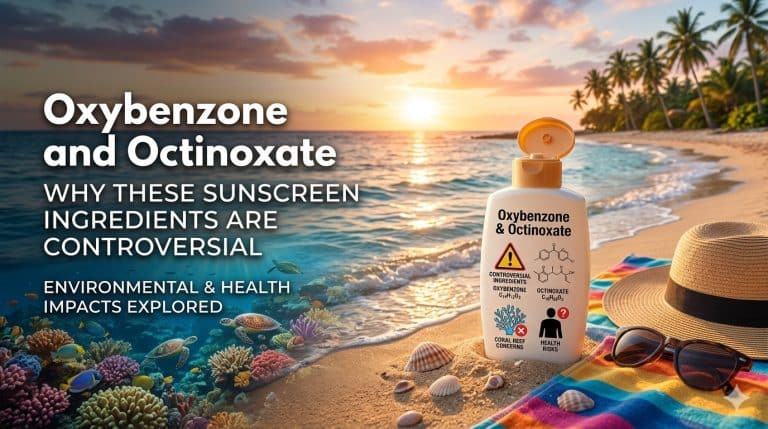
- Free from oxybenzone and octinoxate — the two ingredients banned in Hawaii and several other regions for their impact on coral reefs
- No parabens, phthalates, or synthetic fragrance in the inactive ingredient list
- Reef-safe formulation, ideally with non-nano mineral particles
- Transparent sourcing — the brand will tell you where ingredients come from and why they chose them
That’s the shortlist. You don’t need every box ticked to find a good product, but the more boxes a sunscreen ticks, the more confidence you can have in what you’re putting on your skin. If you want to go deeper on what to scan for on the back of the bottle, I’ve put together a separate guide on how to read sunscreen labels without going cross-eyed.
Why conventional sunscreens raise concerns
The issue with most drugstore sunscreens isn’t the SPF — it’s what’s doing the SPF work. Chemical sunscreens absorb UV rays and convert them to heat, which means the active ingredients have to absorb into your skin to do their job. That’s where the concerns start.
A 2019 FDA study confirmed that several common chemical UV filters are absorbed into the bloodstream at levels high enough to warrant further safety research. That’s not the same as saying they’re harmful — but it’s a signal worth paying attention to, especially for daily, year-round use. The full breakdown of which non-toxic sunscreen ingredients to look for and which to avoid is worth a read if you want the deep dive.
The ingredients most commonly raised in this conversation:
Oxybenzone is the headline-grabber. It’s been linked to hormone disruption in lab studies and is one of the chemicals banned in Hawaii for its role in coral bleaching. It’s also been detected in the bloodstream hours after a single application. If you want the full picture on this one specifically, I’ve covered the dangers of oxybenzone in sunscreen in detail.
Octinoxate is similar — flagged for both potential hormonal effects and coral damage. Often appears alongside oxybenzone.
Homosalate is a penetration enhancer, meaning it helps other ingredients absorb more deeply. Research is ongoing into how it accumulates in the body over time.
Avobenzone is generally considered less concerning, but it breaks down quickly in sunlight, so formulas using it often need stabilizers to remain effective.
Beyond the active ingredients, conventional sunscreens often contain parabens, synthetic fragrance blends, and retinyl palmitate (a vitamin A derivative that some research suggests may behave unfavorably when exposed to UV light — counterintuitive for a sunscreen).
None of this means a single bottle of conventional sunscreen will harm you. The concern is cumulative — these are products most people use repeatedly, on large areas of skin, often from childhood onwards. That’s the case for being thoughtful about what’s in them.
Mineral vs chemical: the bit that actually matters
This is the decision that does most of the work. Get this right and the rest is detail. I’ve written a full comparison of mineral vs chemical sunscreen if you want to weigh them side by side, but here’s the short version.
Mineral sunscreens (also called physical sunscreens) use zinc oxide or titanium dioxide to sit on top of the skin and physically reflect UV rays. They start working the moment you apply them, they’re stable in sunlight, and they’re generally gentler on sensitive skin — which is why they’re the go-to recommendation for babies, children, and anyone with eczema, rosacea, or reactive skin. Zinc oxide gets a lot of attention as the gold-standard active ingredient — if you’ve ever wondered whether zinc oxide sunscreen is actually safe, the short answer is yes, and the long answer is worth reading.
The historical downside was the white cast. Zinc oxide is white, and older mineral formulas left you looking like a lifeguard from 1985. Modern formulas have largely fixed this — micronized zinc, tinted versions, and clever inactive ingredients have made mineral sunscreens far more wearable than they were even five years ago. I’ve covered how to deal with mineral sunscreen white cast in its own post for anyone who’s been put off mineral SPF in the past. They can still feel slightly heavier than chemical formulas and may need more frequent reapplication when swimming, but the trade-off is worth it for most people.
Chemical sunscreens absorb into the skin and convert UV rays into heat. They tend to feel lighter, blend invisibly, and disappear into the skin — which is genuinely appealing, especially under makeup. The catch is everything I covered in the section above: the active ingredients have to absorb to work, and several of those ingredients carry the concerns I’d rather avoid.
If you’re looking for the simplest decision rule: choose mineral, look for zinc oxide as the primary active ingredient, and you’ve already done 80% of the work. And if you’re skeptical about whether mineral SPF actually performs as well as the conventional stuff, I’ve tackled that head-on in does non-toxic sunscreen actually work.
What to look for when you’re choosing one
Once you’ve decided on mineral, the rest is fine-tuning. Here’s what actually matters when you’re standing in the aisle (or scrolling a product page).
Zinc oxide concentration. Look for at least 20% zinc oxide for solid broad-spectrum protection. Non-nano zinc oxide is preferable — the particles are larger than 100 nanometers, which means they sit on the skin’s surface rather than being absorbed.
SPF rating. Aim for SPF 30 to 50. The jump from SPF 30 to 50 is smaller than people think — SPF 30 blocks about 97% of UVB rays, SPF 50 blocks 98%. Higher numbers can create a false sense of security and tempt people to skip reapplication, which is the bigger risk.
Broad spectrum. The label needs to say “broad spectrum,” meaning the formula protects against both UVB (the burn-and-skin-cancer rays) and UVA (the aging-and-also-skin-cancer rays). Without both, you’re only getting half the protection.
Water resistance. If you’ll be swimming or sweating, look for water-resistant formulas rated for 40 or 80 minutes. No sunscreen is genuinely “waterproof,” whatever the marketing says.
Clean inactive ingredients. Even mineral sunscreens can contain parabens, phthalates, synthetic fragrance, PEGs, or phenoxyethanol in high concentrations. The active ingredient is only half the story — scan the full list.
Third-party certifications. EWG Verified, Made Safe, Leaping Bunny (for cruelty-free), and NSF certifications are reasonable signals that a brand has had its claims independently checked. They’re not perfect, but they’re a useful shortcut.
Choosing the right type for your situation
Sunscreen isn’t one-size-fits-all. The best formula for your face is rarely the best one for your kids’ beach day.
For face. Daily facial sunscreen should be lightweight, non-comedogenic, and play well with the rest of your routine. Tinted versions are often the easiest entry point — they cancel out the white cast and double as light coverage. If you wear makeup, how to layer sunscreen with makeup covers the application order that actually works (it’s not the one most people use).
For body. Body sunscreens can be thicker, more moisturizing, and more affordable per ounce. The visible application is actually helpful — you can see where you’ve missed.
For babies and kids. Children’s formulas should have a high zinc oxide concentration, minimal ingredient lists, and ideally a tear-free formulation. One important note: babies under six months shouldn’t use sunscreen at all. Physical barriers — shade, hats, long sleeves — are the recommendation for the under-sixes-months crowd.
For active and sport use. Strong water resistance, sweat-proof formulation, and a non-drip consistency matter most here. Stick formats are convenient for reapplication mid-activity.
For acne-prone skin. Look for non-comedogenic, lightweight, oil-free formulas. Mineral SPF with niacinamide or extra zinc can actually help skin rather than aggravate it. I’ve covered the specifics in our guide to non-toxic sunscreen for acne-prone skin.
Tinted formulas. These have quietly become the smartest choice for a lot of people. Iron oxides in tinted mineral sunscreens add protection against visible light and blue light — relevant if you spend hours in front of screens. They also solve the white-cast problem and give you a light, even tone without needing foundation.
Decoding the label
A few terms worth knowing so you’re not at the mercy of marketing copy.
SPF measures UVB protection only — not UVA. SPF 15 blocks roughly 93% of UVB rays, SPF 30 blocks 97%, SPF 50 blocks 98%, and SPF 100 blocks 99%. The jumps are smaller than the numbers suggest.
Reef-safe isn’t officially regulated, but it generally indicates a formula without oxybenzone and octinoxate, made with biodegradable ingredients and non-nano mineral particles. Hawaii, Key West, Palau, and the US Virgin Islands have all banned certain sunscreen chemicals to protect coral reefs. If you’re traveling to one of these places, it’s worth understanding what “reef-safe sunscreen” actually means before you pack.
Non-nano vs nano refers to the size of the mineral particles. Non-nano particles are larger than 100 nanometers, sit on the skin’s surface, and are the generally preferred choice. Nano particles are smaller and absorb more readily — research on their long-term safety is still ongoing.
How to actually apply it
Even the best non-toxic sunscreen won’t protect you if it’s applied badly. This is the part most guides skim over, and it’s where most people go wrong.
How much. A quarter teaspoon (about a nickel-sized blob) for face and neck. A full ounce — about a shot glass — for the whole body. Most people use somewhere between a quarter and half of that, which is part of why so many “I burned even though I wore sunscreen” stories exist.
When. Mineral sunscreens work immediately, but apply 15 minutes before sun exposure anyway to give the formula time to settle. Don’t forget the often-missed spots: ears, the back of the neck, the tops of feet, hands, and the part in your hair.
How often. Every two hours, minimum. Immediately after swimming or heavy sweating. After toweling off. Even on cloudy days — 80% of UV rays still get through cloud cover.
A few application habits that make a real difference: apply to dry skin before you get dressed, work in circular motions for even coverage, and let one layer absorb before adding more if you want extra protection. Don’t forget SPF lip balm — lips burn too. And remember that UV rays penetrate some fabrics, particularly thin or wet ones.
Common mistakes that undo all the effort
A few traps that catch even people who care:
- Using expired sunscreen. Most sunscreen is good for about three years unopened, but the active ingredients degrade. If you’re not sure whether yours is still working, can you use expired sunscreen covers what’s actually happening inside the bottle.
- Skipping reapplication. Protection degrades with time, sweat, water, and friction. One morning application doesn’t get you through a beach day.
- Not using enough. This is the big one. Most people apply between a quarter and a half of the recommended amount and wonder why they still burn.
- Relying on SPF in makeup. The SPF in your foundation is usually too low and applied too thinly to count as actual sun protection.
- Forgetting UV exposure through windows. Car side windows and most house windows let UVA rays through. Long drives, working by a sunny window — both worth thinking about.
- Only applying when it’s sunny. Cloud cover blocks a fraction of UV, not most of it.
Sun protection beyond sunscreen
Sunscreen is one tool. The most sun-savvy people use several.
Physical protection does a lot of the heavy lifting. Wide-brimmed hats (three-inch brim or bigger), UPF-rated clothing, sunglasses with 100% UVA/UVB protection, and seeking shade during peak hours (roughly 10am to 4pm) all reduce your overall UV exposure significantly.
Antioxidant support from your diet isn’t a replacement for sunscreen, but it does help your skin handle UV exposure better. Vitamin C-rich foods, green tea, lycopene (tomatoes, watermelon), and omega-3s are the usual recommendations. Topical antioxidants in your morning skincare routine can layer with sunscreen for additional support.
Smart sun habits are the unglamorous part. Check the UV index, build up sun exposure gradually rather than going from zero to a full beach day, and remember that water, sand, and snow all reflect UV — meaning your effective exposure is higher than it feels. Altitude increases UV exposure too, which catches a lot of people off guard on ski trips.
Special considerations
During pregnancy. Mineral sunscreens are the safer choice — they sit on the surface rather than absorbing, which sidesteps any concerns about chemical filters crossing the placental barrier. Pregnancy hormones can also increase sun sensitivity and the risk of melasma, so daily SPF becomes more important, not less.
For sensitive skin and eczema. Fragrance-free, minimal ingredient lists, non-nano zinc oxide, and soothing additions like aloe or chamomile are what to look for. Patch test on the inside of your forearm for 24 hours before applying to your face or larger areas.
For darker skin tones. The white cast challenge is real, and it’s why mineral sunscreen has historically been a harder sell for people with deeper skin tones. Tinted formulas in a range of shades have largely solved this — they cancel the cast and even out tone. Powder sunscreens are useful for reapplication over makeup. And while darker skin does have some natural UV protection (around SPF 13, depending on tone), it’s nowhere near enough to skip sunscreen.
Making the switch without overthinking it
You don’t need to throw out every bottle you own and start over. The most sustainable way to switch is gradually.
Finish what you have on less sensitive areas (body before face), or donate unopened conventional sunscreen if you’d rather not use it at all. Then start with one product — usually your daily face SPF, since that’s the one you’ll use most consistently and notice the difference with first. Get comfortable with mineral formulas. Replace as you run out.
Over time, you’ll build a small kit: a daily face SPF, a body sunscreen for outdoor activities, a kids’ formula if relevant, a sport or water-resistant version, an SPF lip balm, and travel sizes for bags and cars. None of that has to happen in one shop.
Frequently asked questions
Will non-toxic sunscreen leave a white cast?
Modern mineral formulas have come a long way. Tinted versions, sheer zinc formulations, and thorough blending can minimize or eliminate white cast entirely. Some residual whiteness is normal and actually indicates the sunscreen is doing its job — it’s the visible layer reflecting UV rays.
Is mineral sunscreen as effective as chemical sunscreen?
Yes, when applied correctly and in the right amount. Zinc oxide provides broad-spectrum protection and is one of the most stable UV filters available. The catch is application — mineral formulas need a generous, even layer to perform as advertised.
How often should I reapply?
Every two hours during sun exposure, and immediately after swimming, sweating, or toweling off — regardless of whether the bottle says “water-resistant.”
Can I use the same sunscreen on my face and body?
You can, but you’ll usually be happier with two formulas. Facial sunscreen is typically lighter, non-comedogenic, and designed to work under makeup. Body sunscreen is thicker and more moisturizing.
Do I need sunscreen on cloudy days or in winter?
Yes. Up to 80% of UV rays penetrate cloud cover, and UVA exposure happens year-round — including through windows. Daily SPF is daily SPF, regardless of the forecast.