How to Read Sunscreen Labels: Decoding SPF, PA+, and Clean Claims
This post may contain affiliate links. This means if you click on the link and purchase something, I will receive a commission with no extra cost to you. For more information, please read my disclaimer.
Sunscreen labels are packed with numbers, acronyms, and marketing claims that can make choosing the right product feel like decoding a foreign language. Understanding what SPF, PA+, broad spectrum, and “clean” labels actually mean puts you in control of your sun protection decisions.
Key Takeaways
- SPF measures UVB protection only, not UVA — so it’s just one piece of the puzzle.
- The PA+ rating system tells you how much UVA protection a sunscreen actually provides.
- “Broad spectrum” on a label means the product protects against both UVA and UVB rays.
- Terms like “clean,” “natural,” and “non-toxic” are not regulated by the FDA, so you need to read the ingredient list yourself.
- Mineral sunscreens use zinc oxide or titanium dioxide, while chemical sunscreens use synthetic UV filters.
What Does SPF Actually Mean?
SPF stands for Sun Protection Factor, and it specifically measures how well a sunscreen protects your skin from UVB rays. UVB rays are the ones responsible for sunburn and contribute significantly to skin cancer risk.
The number itself tells you how much longer you can stay in the sun before burning compared to wearing no protection at all. SPF 30 filters out about 97% of UVB rays, while SPF 50 filters out roughly 98% — the difference is smaller than most people realize.
Here’s a quick breakdown of what the numbers mean in practice:
- SPF 15 — Blocks around 93% of UVB rays, suitable for minimal outdoor exposure
- SPF 30 — Blocks around 97% of UVB rays, recommended for daily use
- SPF 50 — Blocks around 98% of UVB rays, ideal for extended outdoor activity
- SPF 100 — Blocks around 99% of UVB rays, but the marginal gain is minimal
Higher SPF doesn’t mean you can skip reapplication. Reapplying every two hours matters far more than choosing SPF 100 over SPF 50.
Understanding the PA+ Rating System
The PA+ system originated in Japan and is now widely used across Asia and increasingly in Western markets. It measures UVA protection — the rays that penetrate deeper into the skin and cause aging, hyperpigmentation, and long-term DNA damage.
UVA rays make up about 95% of the UV radiation that reaches Earth’s surface. They don’t cause immediate sunburn, which is why they’re easy to overlook — but they’re present year-round, even on cloudy days.
The PA+ scale works as follows:
- PA+ — Minimal UVA protection
- PA++ — Moderate UVA protection
- PA+++ — High UVA protection
- PA++++ — Extremely high UVA protection
If your sunscreen doesn’t carry a PA rating, check for the words “broad spectrum” on the label instead. In the US, the FDA requires broad spectrum labeling to confirm meaningful UVA protection.
Broad Spectrum: What It Means and Why It Matters
“Broad spectrum” is an FDA-regulated term that confirms a sunscreen protects against both UVA and UVB rays. It’s one of the more reliable claims you’ll find on a US sunscreen label.
Without broad spectrum protection, you might prevent sunburn while still experiencing UV-related skin aging and increased skin cancer risk from UVA exposure. Always look for both SPF and broad spectrum together on the label.
Some labels also state “water resistant (40 minutes)” or “water resistant (80 minutes).” This tells you how long the protection holds up during swimming or sweating before you need to reapply. No sunscreen is truly waterproof, regardless of how it’s marketed.
Decoding “Clean,” “Natural,” and “Non-Toxic” Claims
This is where label reading gets genuinely tricky. Terms like “clean,” “natural,” “green,” and “non-toxic” are not regulated by the FDA. Any brand can use them without meeting a defined standard.
That doesn’t mean the claims are always meaningless — but it does mean you can’t take them at face value. You need to read the actual ingredient list to understand what’s in the formula.
I recommend looking specifically at the “active ingredients” section first. This tells you which UV filters are being used. Understanding what’s actually in your sunscreen is the most reliable way to evaluate any “clean” claim on the packaging.
Some ingredients commonly flagged by clean beauty advocates include:
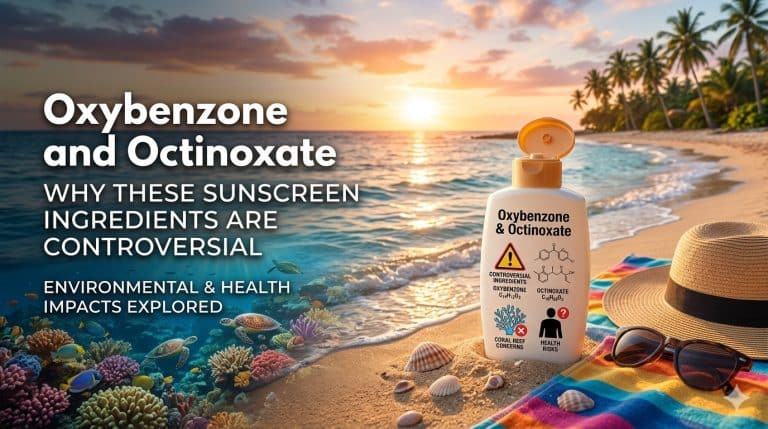
- Oxybenzone — A chemical UV filter linked to hormone disruption concerns
- Octinoxate — Another chemical filter with potential endocrine effects
- Homosalate — Absorbs into the bloodstream at levels that have raised regulatory questions
- Avobenzone — Widely used but degrades in sunlight without stabilizers
If you’re prioritizing cleaner formulas, look for sunscreens where zinc oxide or titanium dioxide are the only active ingredients listed.

Mineral vs. Chemical Sunscreen: What the Label Tells You
The active ingredient section will immediately tell you whether a sunscreen is mineral, chemical, or a hybrid of both. This distinction matters more than many front-of-pack claims.
Mineral sunscreens use zinc oxide and/or titanium dioxide to physically block UV rays. Chemical sunscreens use synthetic compounds that absorb UV energy and convert it into heat. For a deeper breakdown, I’d recommend reading about the differences between mineral and chemical sunscreen before making your choice.
Key differences you’ll spot on labels include:
- Mineral-only formulas list zinc oxide or titanium dioxide as the sole active ingredient(s)
- Chemical formulas list compounds like oxybenzone, avobenzone, or octisalate
- Hybrid formulas combine both mineral and chemical filters
Neither type is automatically better — it depends on your skin type, preferences, and values. But knowing which you’re buying helps you make an informed decision.
How to Use This When Shopping
Next time you pick up a sunscreen, run through this quick mental checklist before putting it in your basket. Start with the active ingredients, then check for broad spectrum labeling and the SPF number.
If you want to go deeper on finding a product that meets both performance and ingredient standards, check out this guide to non-toxic sunscreens that walks through specific product recommendations. Being a smarter label reader doesn’t require a chemistry degree — it just takes knowing what to look for.
In summary, here’s a fast reference for reading any sunscreen label:
- Check SPF for UVB protection strength
- Look for “broad spectrum” to confirm UVA coverage
- Find a PA++++ rating if you want a quantified UVA measure
- Read the active ingredients to identify mineral vs. chemical filters
- Ignore unregulated terms like “natural” or “clean” unless the ingredients back them up
Sunscreen is one of the most evidence-backed tools for long-term skin health. Reading the label correctly means you actually get the protection the product promises.