Oxybenzone and Octinoxate: Why These Sunscreen Ingredients Are Controversial
This post may contain affiliate links. This means if you click on the link and purchase something, I will receive a commission with no extra cost to you. For more information, please read my disclaimer.
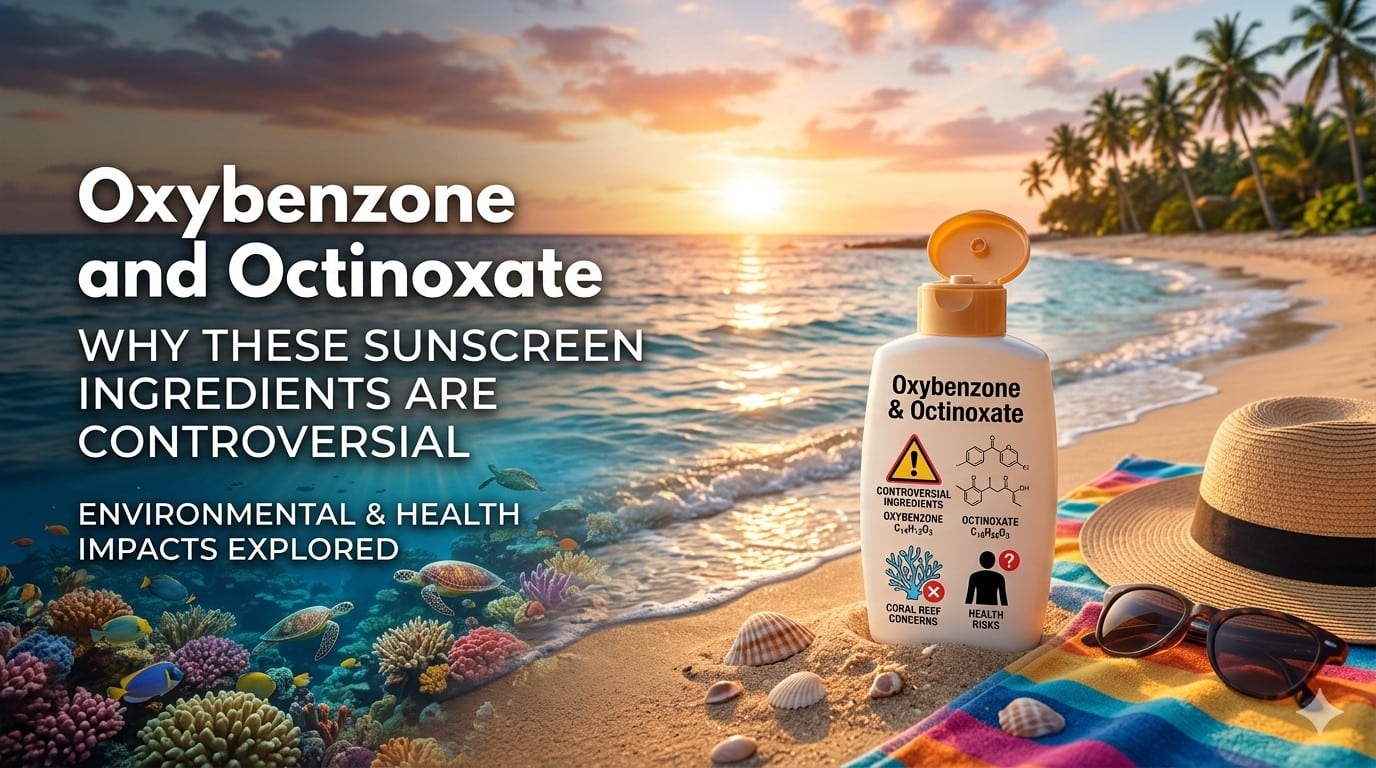
Oxybenzone and octinoxate are two of the most widely used chemical UV filters in sunscreen, but growing scientific evidence links them to potential health risks and serious environmental harm. Understanding what these ingredients do — and why they’re controversial — can help you make smarter, safer choices about sun protection.
Key Takeaways
- Oxybenzone and octinoxate are chemical UV filters found in the majority of non-mineral sunscreens on the market.
- The FDA reclassified both ingredients as “not GRASE” in 2021, meaning more safety data is required before they can be confirmed safe.
- Both compounds have shown endocrine-disrupting properties in laboratory and animal studies, with oxybenzone detected in 96% of Americans tested.
- Oxybenzone causes coral bleaching and DNA damage at concentrations as low as 62 parts per trillion, leading to bans in Hawaii, Palau, and other locations.
- Zinc oxide and titanium dioxide are currently the only FDA-confirmed safe and effective sunscreen active ingredients available in the U.S.
What Are Oxybenzone and Octinoxate?
Oxybenzone (benzophenone-3) and octinoxate (ethylhexyl methoxycinnamate) are organic chemical UV filters that have been used in sunscreen formulations for decades. Oxybenzone has been in commercial use since the 1970s, while octinoxate dates back to the 1950s.
Unlike mineral sunscreens, these ingredients don’t sit on top of the skin. They absorb UV radiation and convert it into heat energy, which the skin then releases. Oxybenzone provides broad-spectrum UVA and UVB protection, while octinoxate primarily targets UVB rays in the 280–320 nm wavelength range.
Their appeal has always been cosmetic. They’re lightweight and non-greasy, which makes them a popular choice for formulators compared to heavier mineral alternatives. Oxybenzone alone appears in an estimated 65–70% of non-mineral sunscreens sold in the U.S., according to EWG research.
Why the FDA Changed Its Position
For years, these ingredients were considered safe by default. That changed in 2019 when the FDA proposed new sunscreen regulations, followed by a 2021 update reclassifying oxybenzone and octinoxate from “Generally Recognized as Safe and Effective” (GRASE) to “not GRASE,” according to the FDA.
The FDA’s concern centers on systemic absorption — the fact that these chemicals enter the bloodstream through the skin. The agency’s safety threshold is 0.5 ng/mL in blood plasma, above which further pharmacological safety studies are required.
A landmark 2019 study published in JAMA (Matta et al.) showed oxybenzone reaching blood plasma concentrations of up to 258 ng/mL after just a single day of normal sunscreen application. That’s more than 500 times the FDA’s threshold. Octinoxate exceeded the threshold in the same study.
The Health Concerns Explained
The most significant worry is that both compounds display endocrine-disrupting properties in laboratory and animal studies. Oxybenzone has been shown to mimic estrogen and demonstrate estrogenic, androgenic, and anti-androgenic activity depending on the biological system studied.
Octinoxate has also shown estrogenic activity in animal studies. The Scientific Committee on Consumer Safety (SCCS) in Europe has recommended restricting oxybenzone to 2.2% on the face and 6% on the body, citing reproductive toxicity concerns — stricter limits than those currently in place in the U.S.
A CDC/NHANES population study found oxybenzone in the urine of approximately 96% of Americans tested, indicating near-universal exposure, according to the CDC. It’s also been detected in blood plasma and breast milk.
That said, no direct causal link to adverse human health outcomes has been confirmed to date. Scientists stress the importance of distinguishing between laboratory-dose effects and real-world exposure levels. The science is concerning enough to warrant caution, but it isn’t yet conclusive. Understanding which sunscreen ingredients are genuinely safer is a good starting point for making better product choices.
The Environmental Damage to Coral Reefs
The environmental case against these ingredients is arguably even stronger than the human health case. A seminal 2016 study by Craig Downs et al., published in the Archives of Environmental Contamination and Toxicology, found that oxybenzone causes coral bleaching, DNA damage, and deformities in coral larvae at concentrations as low as 62 parts per trillion.
Octinoxate has similarly been shown to contribute to coral bleaching by disrupting zooxanthellae — the symbiotic algae that corals depend on for nutrition and survival. An estimated 6,000–14,000 tons of sunscreen wash into the world’s oceans each year from swimmers and snorkelers, according to EPA data on coral reef threats.
Both chemicals have been detected in ocean water, marine sediments, and the tissues of marine animals including fish, dolphins, and mussels near high-traffic tourist swimming areas. Climate change remains the primary driver of mass bleaching events, but reducing additional chemical stressors is a prudent precautionary measure.
Where These Ingredients Are Banned
A growing number of locations have moved to restrict or ban oxybenzone and octinoxate outright. Here’s where the most significant regulations are in place:
- Hawaii became the first U.S. state to ban sunscreens containing both ingredients, with Act 104 taking effect January 1, 2021, and a 2023 amendment further restricting oxybenzone to below 0.5% concentration, per Hawaii Department of Health guidance.
- Palau led the world by banning 10 reef-harmful sunscreen chemicals including oxybenzone, effective January 1, 2020, according to the Palau government.
- The U.S. Virgin Islands enacted a similar ban in 2019.
- Bonaire, Aruba, and certain ecological parks in Mexico have also put restrictions in place.
- Key West, Florida, passed a local ban in 2019, though it was later preempted by Florida state law.
These bans reflect a clear shift in environmental policy. The question of what “reef-safe” actually means, however, remains murky for most consumers.
The “Reef-Safe” Label Problem
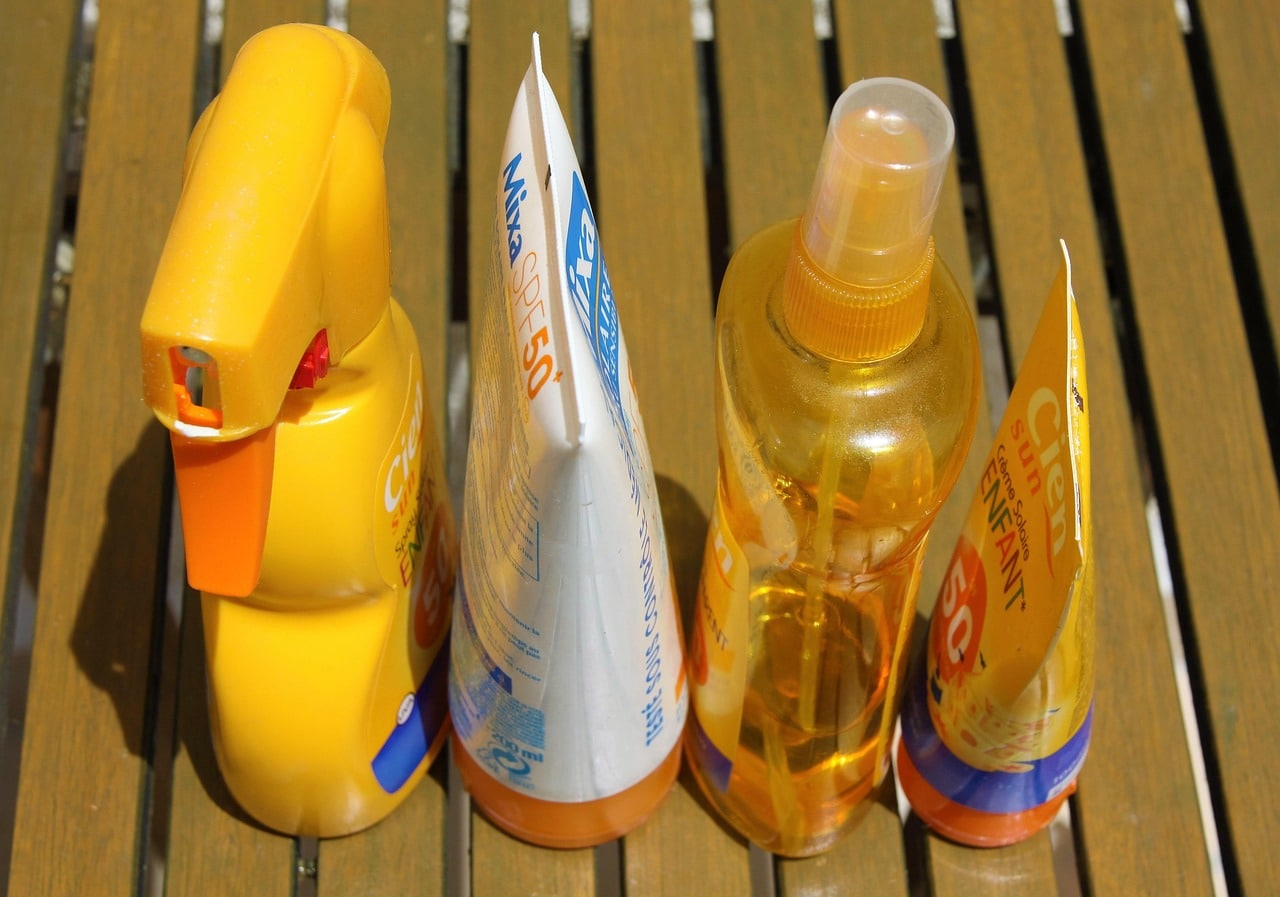
Here’s something many people don’t realize: the term “reef-safe” has no legal definition or federal standard in the United States. The FDA hasn’t established a regulatory framework for this label, so brands can use it freely without independent verification.
That means a sunscreen can carry a reef-safe label and still contain octinoxate, oxybenzone, or other potentially harmful chemical filters. The only reliable way to check is to read the active ingredients list on the back of the bottle.
Look specifically for zinc oxide and/or titanium dioxide as the sole active ingredients. These are the only sunscreen actives the FDA has confirmed as both safe and effective in its 2021 proposed rule.
Safer Alternatives to Consider
The shift to mineral sunscreen over chemical sunscreen is one of the most meaningful changes you can make. Zinc oxide and titanium dioxide work by reflecting and scattering UV radiation rather than absorbing it, and both have a strong safety profile for human use and marine environments.
Non-nano formulations of zinc oxide are particularly recommended, as the larger particle size reduces the chance of the mineral being absorbed into the skin or ingested by marine life. Zinc oxide also provides true broad-spectrum UVA and UVB coverage, making it a strong all-around performer.
Other chemical filters currently under FDA safety review include octocrylene, homosalate, and avobenzone. Octocrylene is especially worth avoiding, as it degrades into benzophenone, a possible carcinogen. Some newer-generation chemical filters available in Europe and Asia — including Tinosorb S and Mexoryl SX — may be safer options, but they haven’t yet been approved by the FDA.
Dermatologists still recommend consistent use of broad-spectrum SPF 30+ sunscreen. Combining that with UPF-rated clothing and accessories remains the most effective overall sun protection strategy, regardless of which formulation you choose.
Sources
FDA – FDA’s Approach to Sun Safety
JAMA Network – Matta et al. Sunscreen Systemic Absorption Study
Springer – Archives of Environmental Contamination and Toxicology, Downs et al.
Hawaii Department of Health – Sunscreen FAQs
Palau Government – Sunscreen Ban
EPA – Threats to Coral Reefs
CDC – Benzophenone-3 Biomonitoring Fact Sheet
EWG – The Trouble with Sunscreen Chemicals